For homeowners across Australia, 2026 has already proven to be an unusually demanding year. Three interest rate rises driven by a global oil shock, inflation running at its highest since 2023 and now a federal Budget that represents the biggest overhaul of property investment tax settings in more than a quarter of a century – all of it arriving within the space of a few months.
Taken individually, any one of these developments would be significant. Arriving together, they have created a level of uncertainty that makes the next 12 to 18 months more consequential than usual for buyers, sellers and investors.
The Middle East backdrop
Running beneath the Budget is a global environment that was already unsettled before the government handed down its papers.
In late February, military action against Iran effectively closed the Strait of Hormuz, through which around 20% of the world's daily oil supply passes. Global oil prices surged above US$110 per barrel and have largely remained elevated. Australia, which imports more than 90% of its refined fuel, felt the impact quickly through household costs, business expenses and the Reserve Bank of Australia’s (RBA’s) rate decisions.
The RBA has already raised the cash rate three times in 2026, most recently to 4.35% on 5 May. The federal Budget forecasts inflation reaching 5% through the year to June 2026 before easing as global conditions stabilise.
The Budget’s implications for property investors
The centrepiece of the 12 May Budget is a fundamental overhaul of two tax concessions that have shaped residential property investment for decades.
Negative gearing
Under the current system, investors who make a loss on a rental property can deduct that loss against their other income, including wages.
From 1 July 2027, that deduction against wages disappears for established residential properties purchased after Budget night (7:30pm on 12 May 2026). Investors who buy an existing property from here on can still carry forward rental losses, but can only offset them against income from other investment properties, not their salary. For many investors, that significantly changes the after-tax numbers.
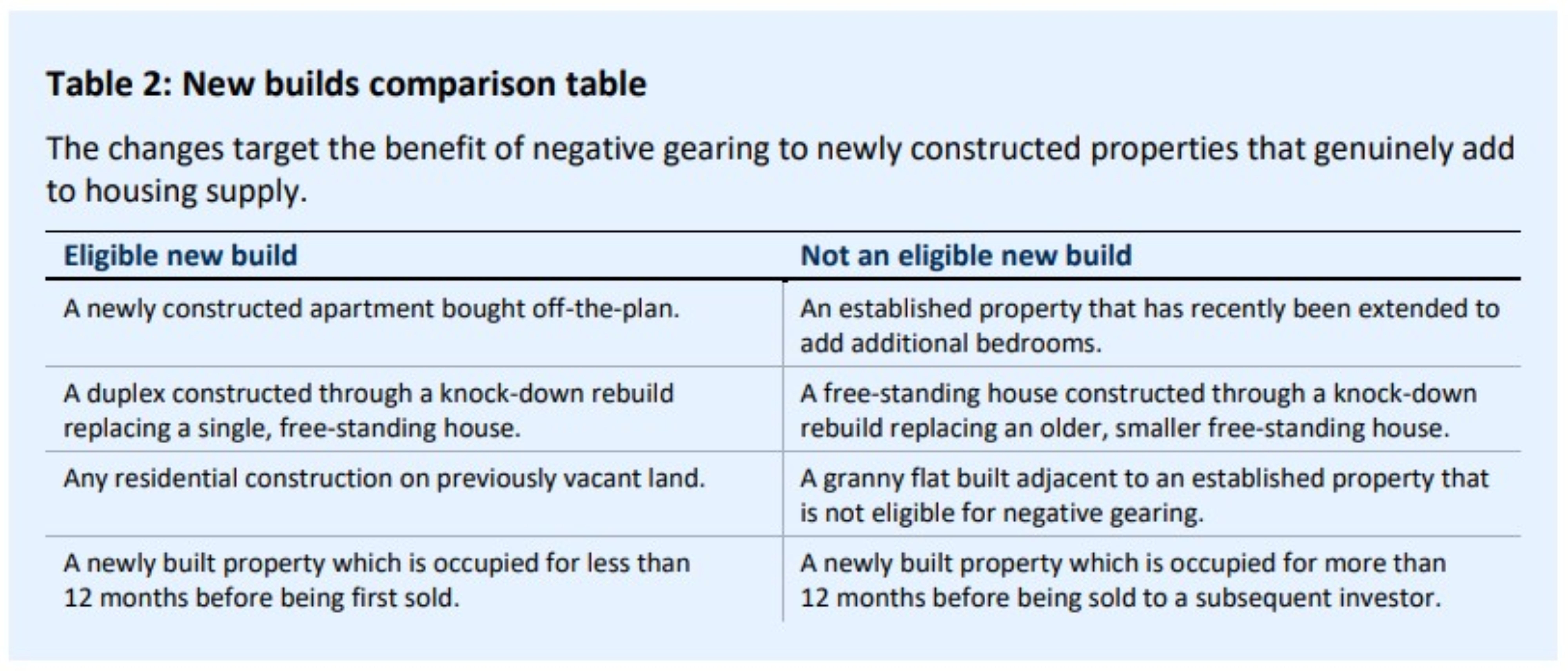
Properties held before Budget night are grandfathered and retain existing negative gearing treatment until sold. Established properties purchased between now and 30 June 2027 can be negatively geared during that window, but not after. New builds that genuinely add to housing supply are exempted entirely.
 Capital gains tax
When an investor sells a property held for more than 12 months, they currently pay capital gains tax (CGT) on only half the profit. That 50% discount has been in place since 1999.
From 1 July 2027, it is replaced with a system based on inflation-adjusted gains, with a minimum 30% tax rate on real profits. The new rules apply only to gains accrued after 1 July 2027. Gains built up before that date still attract the old 50% discount.
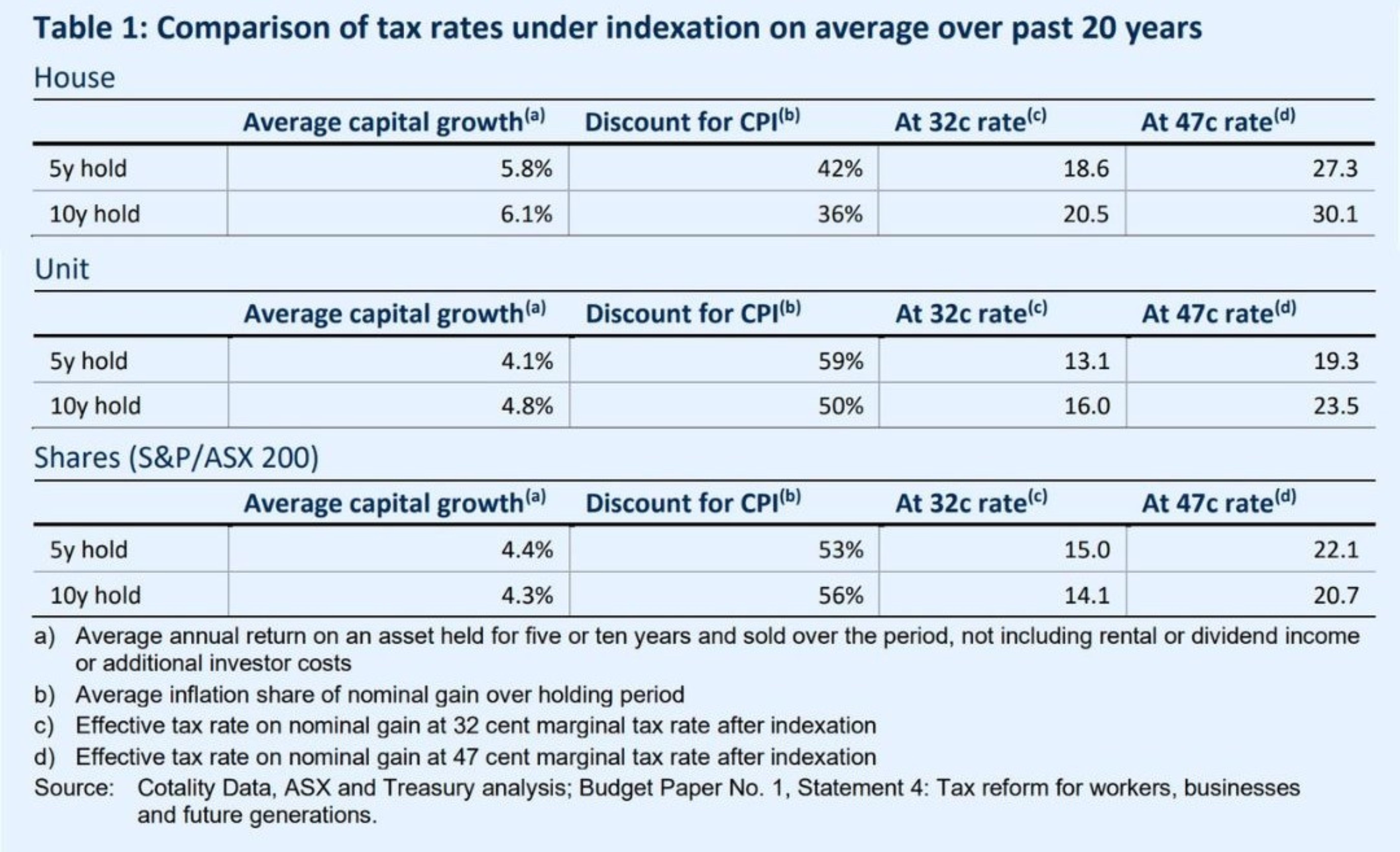
Investors buying new builds can choose between the existing discount or the new indexation model when they eventually sell.
What this means for the Lower North Shore
The rate environment and the budget changes affect every market, but not equally. The Lower North Shore has a particular set of characteristics that shape how this might play out here.
The first is equity. Rising rates bite hardest on owners who borrowed heavily at the peak and face forced selling pressure when repayments become unserviceable. Long-term Lower North Shore owners are typically in a very different position. Years of capital growth mean many carry little or no debt, which means rate rises don't threaten their ability to hold.
Cotality's Pain and Gain report for the December 2025 quarter illustrates how deeply embedded that equity is: 98.6% of Mosman resales made a profit, with a median gain of $558,500 and a median hold period of 12.7 years – more than three years above the national median.
For owners here, the rate cycle matters less as a personal constraint and more as a factor shaping the buyer pool they'll eventually sell into.
The second is the near-term price picture, which varies across the area. According to Domain's March 2026 House Price Report, Cremorne has been the standout, with house prices up 10% over the year to $3.49 million. Neutral Bay has held its ground at $2.55 million. Mosman has seen more near-term softening, with houses down 5% to $5.45 million, though that follows a period of strong growth, and five-year figures remain solid across all three suburbs.
The third factor is supply. The Budget's intent to push investor capital toward new construction runs into a practical reality on the Lower North Shore: there isn't much room to build. Geography, heritage overlays and planning constraints already limit new development here, and with construction costs running around 50% above pre-pandemic levels according to the Australian Bureau of Statistics Producer Price Index, the economics of new projects remain difficult. That constrained pipeline has historically put a floor under values that more development-exposed markets don't have.
A market that now requires careful judgment
The honest assessment is that the market faces more simultaneous headwinds than it has for some time: a rate cycle that may not be finished, an oil shock of uncertain duration and a tax reform package that will take months to be fully priced in.
There is no single right timing strategy in a market like this. Some buyers will wait for clarity, while others will move before further changes take effect. What local knowledge provides, and what national headlines miss, is that the Lower North Shore has consistently behaved differently from the broader Sydney market. Tightly held, owner-occupier suburbs with constrained supply don't respond to uncertainty the way higher-leverage markets do.
That is why local knowledge becomes more important during periods like this. For owners considering selling, honest pricing matters more right now than trying to time the market. For downsizers or buyers looking to move within the area, there is more choice and less competition than a year ago.
If you'd like to talk through what any of this means for your property, the team at Richardson & Wrench Mosman/Neutral Bay is happy to have that conversation. Call us on (02) 9969 7622 or email info@rwm.com.au.